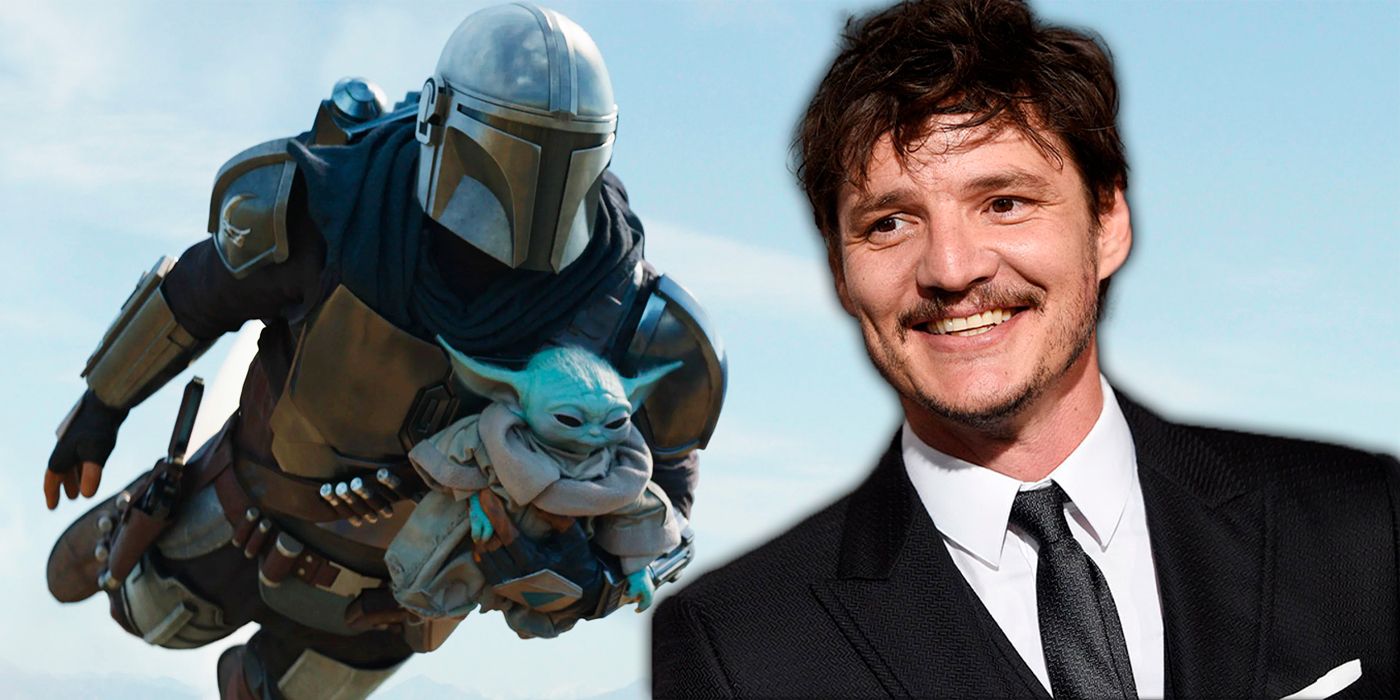
There’s a moment, rare and raw, when the line between performer and character blurs—not by design, but by depth of feeling. That moment arrived in Mexico City when Pedro Pascal, the face and soul behind The Mandalorian, visibly fought back tears during a fan event celebrating the upcoming Mandalorian & Grogu film. It wasn’t scripted. It wasn’t performative. It was human.
In an era where celebrity appearances often feel rehearsed and polished, Pascal’s unguarded reaction struck a chord far beyond typical fanfare. It wasn’t just about nostalgia or promotion—it was about legacy, connection, and the emotional weight of carrying a modern Star Wars icon.
The Moment That Stopped the Room
The event, held at a packed theater in Mexico City, opened with a sizzle reel of The Mandalorian’s most iconic sequences: Din Djarin’s quiet resolve, Grogu’s wide-eyed wonder, the hum of the Razor Crest. But the real electricity came when Pascal took the stage.
Dressed in a dark suit, understated yet commanding, he acknowledged the crowd with his usual grace. Then, as fan videos and heartfelt messages played—many from parents who’d shared the show with their children, some in Spanish—his composure wavered. A pause. A blink too long. A breath caught mid-sentence.
He didn’t break down. He didn’t sob. But those who’ve watched him closely—fans who’ve followed his journey from Narcos to The Last of Us—knew what was happening: Pedro Pascal was holding back tears.
“I didn’t expect this,” he said, voice cracking slightly. “To see how this story has touched so many people… it means more than I can say.”
Why This Reaction Resonated So Deeply
Celebrities cry all the time—on talk shows, award stages, emotional interviews. But Pascal’s restraint made the moment more powerful. He didn’t lean into it. He didn’t dramatize. He resisted the emotion, and that resistance made it real.
This wasn’t just about gratitude. It was about:
- The weight of representation: As a Chilean-born actor raised in the U.S., Pascal has long been a quiet standard-bearer for Latino talent in mainstream Hollywood. The fact that the crowd in Mexico spoke to him in Spanish, shared homemade art of Din Djarin with sombreros, and celebrated the show through a cultural lens—it wasn’t lost on him.
- The bond with Grogu (and the puppeteers): Pascal has repeatedly emphasized that working with Grogu—both the puppet and the creative team behind the character—was unlike anything else in his career. “There’s no acting when you’re looking into that face,” he once said. At the Mexico event, he credited the puppeteers, calling them “the soul of the show.”
- Personal loss and resilience: Pascal has spoken openly about losing both parents in recent years. When he talks about The Mandalorian, he often frames it as a story of found family, protection, and quiet sacrifice—themes that mirror his own life. To see fans embrace that message so passionately was clearly overwhelming.

The Cultural Impact of The Mandalorian in Latin America
Mexico isn’t just a market for The Mandalorian—it’s a passionate stronghold. The show’s blend of Western tropes, minimalist dialogue, and emotional storytelling resonates deeply with Latin American audiences, who’ve long embraced stoic heroes and moral ambiguity in their own cinema.
In Mexico City, fans dressed in handcrafted beskar armor, carried Grogu plushies wrapped in traditional rebozos, and some even brought their children in mini Mandalorian helmets. One fan held a sign that read: "Gracias por enseñarle a mi hijo sobre el honor sin decirlo." (“Thank you for teaching my son about honor without saying it.”)
This cultural blending—Star Wars mythos filtered through regional identity—isn’t happenstance. It reflects how The Mandalorian transcends its genre. It’s not just sci-fi. It’s a parable about fatherhood, duty, and love in silence.
And Pascal, despite being American-raised, has become a symbol of cross-cultural pride—a man who honors his roots while carrying a global franchise.
Behind the Scenes: What The Mandalorian Means to Pascal
To understand why this moment mattered, you have to look beyond the armor.
Pascal didn’t just play Din Djarin—he helped shape him. From insisting on minimal dialogue to advocating for practical effects over CGI, he pushed for authenticity. He fought for the use of real puppets, argued against over-explaining the character’s backstory, and championed a performance rooted in physicality rather than monologues.
This approach was risky. In an age of character-driven storytelling, a protagonist who never shows his face could’ve felt hollow. Instead, Pascal made silence speak volumes.
His performance is built on micro-expressions: a tilt of the head, a pause before speaking, the way he holds Grogu. It’s acting stripped to its essentials—and it requires immense emotional discipline.
So when that discipline cracked in Mexico, it wasn’t weakness. It was proof of investment.
The Mandalorian & Grogu: A New Chapter, An Old Bond
The event wasn’t just a victory lap—it was a preview. The Mandalorian & Grogu, the upcoming film directed by Jon Favreau, marks a shift. This isn’t another season. It’s a cinematic expansion, shot on film, with a bigger budget and deeper stakes.
Early details suggest the story will explore Grogu’s training, Din Djarin’s evolving identity, and their struggle to remain together in a galaxy that keeps pulling them apart.
For Pascal, this isn’t just another project. It’s the culmination of a journey that began in 2019 with a lone bounty hunter and a mysterious child. Now, that story is moving to the big screen—and taking with it the emotional core that fans have come to love.
His reaction in Mexico wasn’t just about gratitude. It was a recognition: This matters. We’ve built something that lasts.
The Rare Power of Authentic Celebrity Moments
In the age of influencer culture and curated personas, authenticity is currency. Fans can spot a manufactured moment from miles away. But Pascal’s near-tears moment felt unscripted, unedited, and deeply sincere.
Consider the alternatives: - A typical celebrity might have smiled, waved, dropped a few rehearsed lines, and left. - A savvy PR move would’ve leaned into the emotion—full tears, dramatic speech, viral clip.
But Pascal did neither. He acknowledged the feeling, let it sit, and moved forward. That restraint made it more powerful.
It’s a lesson for performers and public figures: you don’t have to perform emotion to show it. Sometimes, the most impactful moments are the ones you try to hide.
What This Means for Fans—and the Future of Star Wars
The Mandalorian’s success has reshaped the Star Wars universe. It proved that you don’t need Jedi battles or galactic wars to tell a compelling story. You need character. Heart. Silence.
And Pascal, more than anyone, has become the emotional anchor of that vision.
His reaction in Mexico wasn’t just personal—it was symbolic. It showed that the story of Din Djarin and Grogu has grown beyond Disney’s marketing plans. It belongs to the fans now. To the parents who watch with their kids. To the artists who paint fan art in Oaxaca. To the quiet moments of connection the show has inspired.
As The Mandalorian & Grogu prepares for release, that emotional legacy is its greatest asset.
For fans, the takeaway is simple: keep showing up. Keep sharing your stories. Because when Pedro Pascal fights back tears in Mexico City, it’s not just about him—it’s about all of you.
If you’re moved by a story, say so. If a character changes how you see fatherhood, honor, or love—tell someone. That’s how culture shifts. Not through hype, but through heart.
FAQ
Why did Pedro Pascal get emotional at the Mexico event? He was overwhelmed by fan support, personal connections to the role of Din Djarin, and the cultural significance of the event in Latin America.
Was Pedro Pascal actually crying? No, he fought back tears but maintained composure. His voice cracked, and he paused several times, indicating deep emotion.
How has The Mandalorian resonated in Latin America? The show’s themes of honor, family, and quiet strength align with regional storytelling traditions, making it especially popular in countries like Mexico.
Does Pedro Pascal have a personal connection to Mexico? While he was raised in the U.S., Pascal is of Chilean descent and has strong ties to Latin America. He’s expressed pride in representing Latino talent in Hollywood.
Is The Mandalorian & Grogu movie going to be emotional? Early indications suggest it will deepen the bond between Din Djarin and Grogu, with higher stakes and a more cinematic tone—likely leading to powerful moments.
How does Pedro Pascal portray emotion without showing his face? Through voice modulation, body language, and subtle movements—skills honed over decades in theater and film.
Will Pedro Pascal continue as The Mandalorian after the movie? There’s no official confirmation, but the story is designed to evolve. Pascal has said he’ll follow the character “wherever the story leads.”
FAQ
What should you look for in Pedro Pascal Fights Back Tears at Mandalorian Event in Mexico? Focus on relevance, practical value, and how well the solution matches real user intent.
Is Pedro Pascal Fights Back Tears at Mandalorian Event in Mexico suitable for beginners? That depends on the workflow, but a clear step-by-step approach usually makes it easier to start.
How do you compare options around Pedro Pascal Fights Back Tears at Mandalorian Event in Mexico? Compare features, trust signals, limitations, pricing, and ease of implementation.
What mistakes should you avoid? Avoid generic choices, weak validation, and decisions based only on marketing claims.
What is the next best step? Shortlist the most relevant options, validate them quickly, and refine from real-world results.